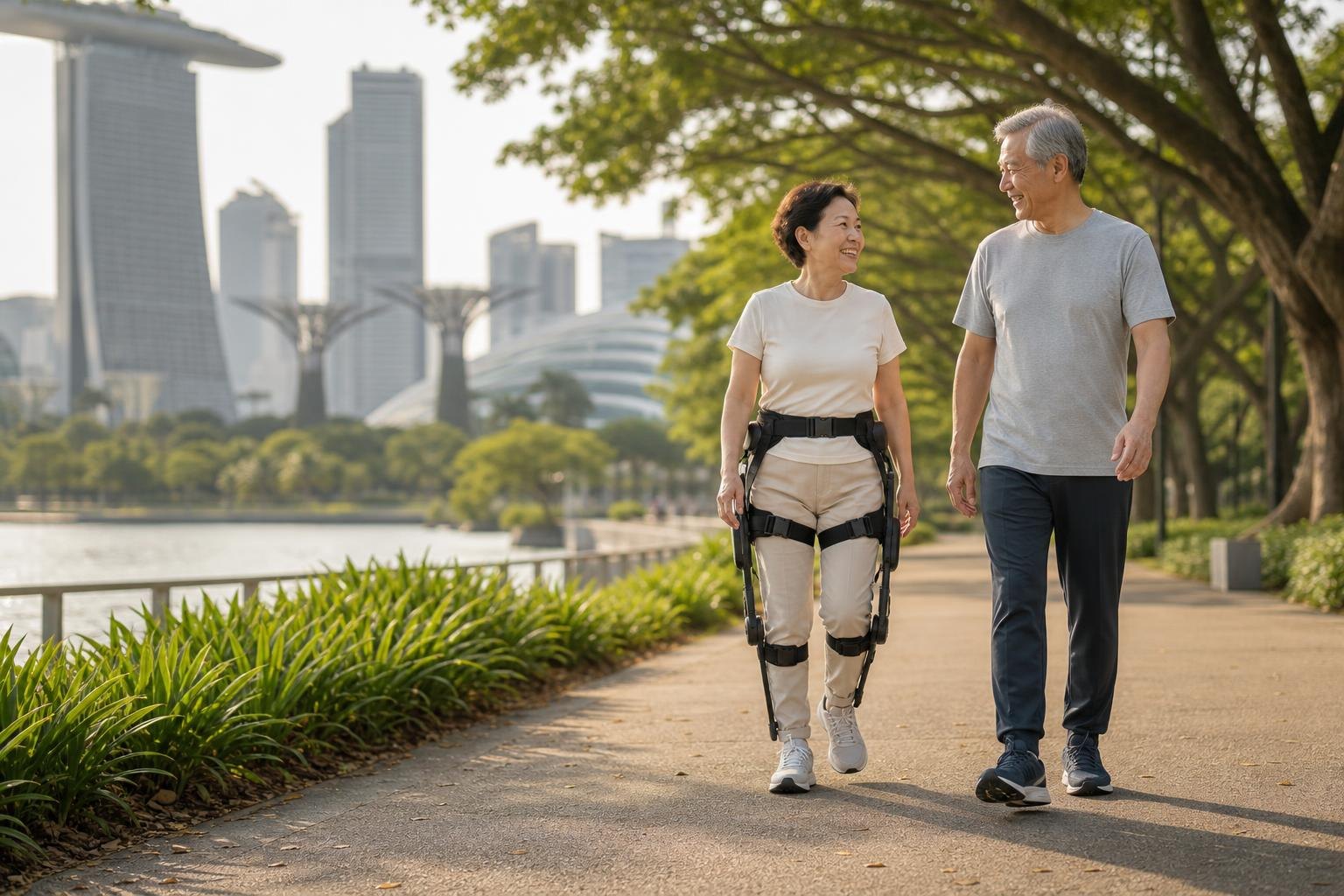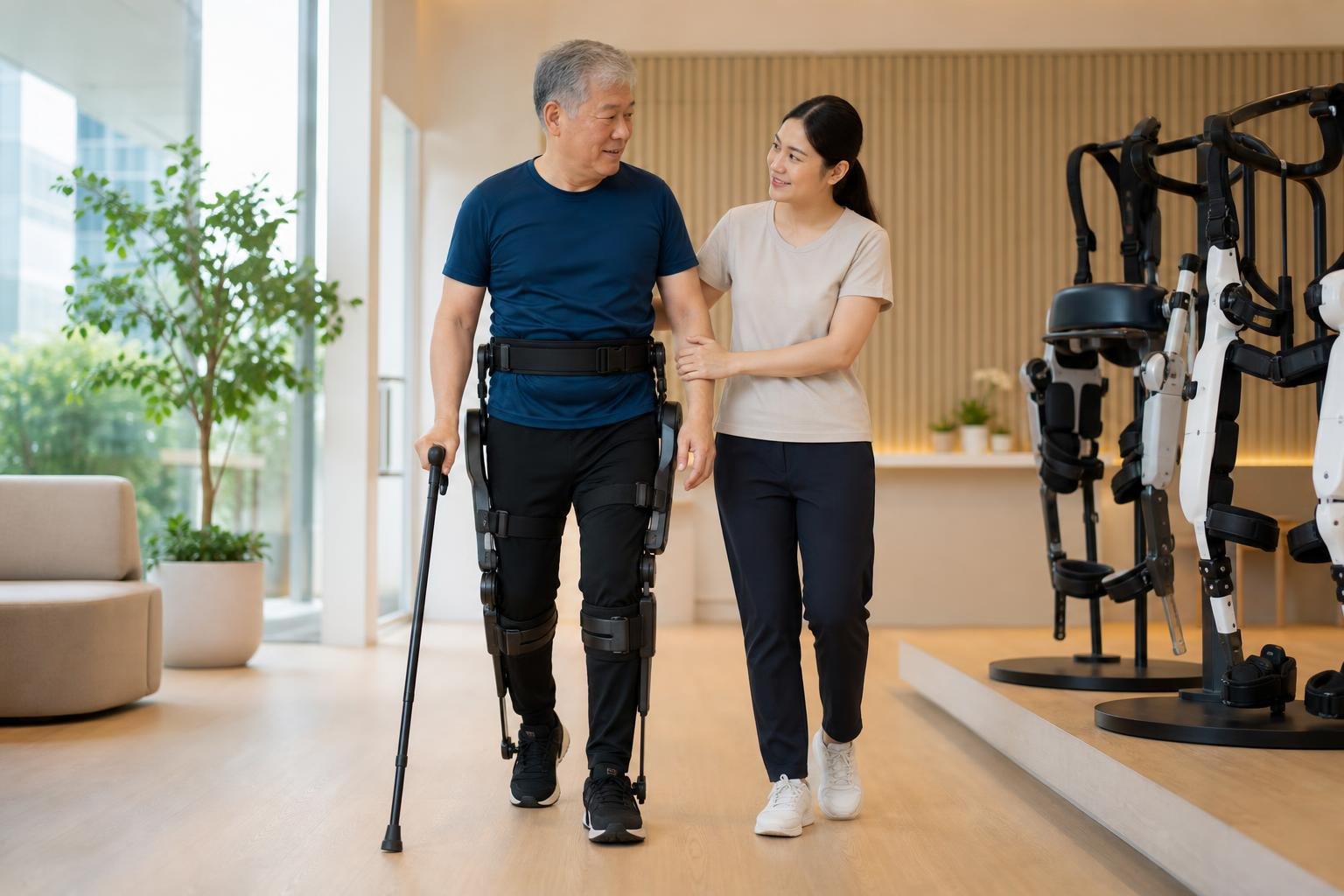
exoskeleton brands Singapore are appearing more frequently in clinic demo rooms and consumer trials. This guide uses a test‑drive analogy to help you compare walking exoskeletons, presents a step‑by‑step exoskeleton trial Singapore checklist, a vendor evaluation checklist (warranty, servicing, approvals, independent data), and a cautious, verifiable profile of EULON Singapore with explicit steps to confirm vendor claims locally.
Why comparing exoskeleton brands Singapore matters now
Multiple vendors sell devices that look similar on spec sheets but feel very different when you put them on. For Singapore users who are close to purchase, the differences in motor control strategy, sensing, weight distribution and battery management determine real‑world usability for daily walks, travel, or integration into rehabilitation pathways. A structured, localised approach to walking exoskeleton comparison helps answer the commercial questions: Which device feels natural? Which vendor supports servicing locally? How will it perform in Singapore’s heat, public transport and clinical settings?
Who should read this
- Adults in Singapore who can stand and walk independently and are evaluating consumer exoskeletons.
- Caregivers and clinicians arranging supervised demos.
- Stroke survivors and rehabilitation teams considering powered support under professional supervision.
Think of each demo as a test‑drive: a practical comparison method
Like road testing cars on your usual routes, exoskeleton demos should be run across the walking conditions you expect to encounter. Different designs change the “feel” of walking—some feel like an assistant gently nudging your hip, others like a timed push at each step.
Key technical differences that change the feel
- Control strategy: continuous torque vs phase‑timed pulses—this affects smoothness and perceived naturalness.
- Sensing and adaptivity: how quickly the device detects speed or direction changes alters comfort during turns or pace shifts.
- Mass and distribution: total weight and whether weight sits high or low influence swing phase and fatigue.
- Assistance scaling and battery behaviour: does perceived assistance drop as battery drains or remain steady until a cutoff?
- Fit and interface: how straps, waistbands and leg cuffs distribute force affects comfort and safety.
Step‑by‑step exoskeleton trial Singapore checklist
Bring this checklist to every appointment to make demos comparable across brands.
- Pre‑trial confirmation: Confirm the demo location, staff qualifications (physiotherapist vs vendor rep), liability and what the trial covers. Ask if the demo will be indoors or include short outdoor segments to reflect Singapore conditions.
- Baseline measures: Record comfortable and fast walking speeds, usual daily distances, any pain or balance limitations, and assistive devices used. For stroke rehabilitation, have your clinician provide a brief gait note.
- Don/doff time: Measure how long it takes to put on and remove the device and who must assist. Faster, simpler handling improves real‑world viability.
- Fit and pressure points: Check strap tightness, hot spots, and how well the device stays aligned during walking.
- Static safety checks: Verify emergency stop, battery display, and quick removal procedures. Singapore demos should show staff trained in emergency removal.
- Controlled walk tests: Walk flat pavement, then repeat at a brisker pace. Note perceived exertion, breathing and gait symmetry.
- Functional tasks: If safe, test turning, short ramps and a few steps with rail support, only when authorised.
- Battery‑to‑assistance check: Observe assistance behaviour on full and partial charge; ask to repeat a short walk while the battery indicates lower charge.
- Data and evidence request: Request any independent or local test reports, peer‑reviewed papers or Singapore trial summaries. Note whether reported cohorts resemble your situation.
- Post‑trial report: Ask for a written summary of observed changes (speed/distance/perceived effort) and next steps for purchase, servicing and training in Singapore.
Vendor evaluation checklist for Singapore buyers
Performance matters, but so does local support. Before committing, verify:
- Warranty scope and duration in Singapore and whether warranty repairs are local or require overseas shipping.
- Spare parts and servicing: Local stock levels, turnaround times and authorised service centres.
- Training and clinician support: Is there a local network of physiotherapists familiar with the device for supervised sessions?
- Regulatory position: Whether the product is marketed as a consumer device or medical device, and any registrations relevant to Singapore—request written proof.
- Independent performance data: Peer‑reviewed studies, independent lab reports or third‑party user trials that match your use case.
- Transparency on limitations: Clear contraindications, intended use and an honest statement that the device is not a substitute for medical care unless supported by evidence.
Walking exoskeleton comparison: practical decision points
When you compare walking exoskeletons, evaluate these practical items:
- How assistance timing feels during steady and variable speeds.
- Whether control modes are manual (level selection) or adaptive (auto‑tuning).
- Fit and ventilation suitable for Singapore’s climate.
- Local after‑sales support and parts availability.
- Quality of independent evidence supporting claims about effort reduction or efficiency.
Verifiable profile of EULON (what they state and how to confirm)
EULON Singapore — EULON is a Chinese‑origin vendor whose hip‑assist consumer devices have been distributed in Singapore through authorised partners. Vendor materials emphasise manufacturing quality and safety, and they state that some models deliver comparatively higher assistance for lower battery draw in certain operating modes. Move It Well is an authorised Singapore distributor for selected Eulon models and conducts supervised demos by appointment.
Vendor‑stated points to note
- EULON emphasises device safety and production quality in vendor literature.
- The vendor claims improved assistance efficiency—meaning higher perceived torque or help at lower power consumption—compared with some earlier consumer hip‑assist designs.
How to confirm EULON claims during exoskeleton trial Singapore demos
- Request independent test reports: Ask for third‑party or academic lab data that quantifies torque output, timing and battery draw under repeatable conditions. Avoid accepting vendor charts without source details.
- Ask for Singapore trial summaries: Request any local user outcome data (walking speed, distance, perceived exertion) from Singapore demonstrations or trials conducted with similar users.
- Observe battery vs assistance in person: Use the trial checklist to test assistance on full and partial charge and note whether assistance scales down gradually or drops abruptly.
- Insist on clinician supervision for clinical users: If you’re post‑stroke or under rehabilitation, ensure a physiotherapist supervises the demo and documents fit, gait changes and safety considerations.
- Verify local servicing: Confirm Move It Well (or the listed distributor) can service EULON units in Singapore and supply spare parts without long delays.
- Get written regulatory positioning: Ask for written confirmation about whether the device is positioned as a consumer product or medical device and any registrations relevant to Singapore.
Where powered exoskeletons may fit in stroke rehabilitation in Singapore
For stroke rehabilitation, standard pathways emphasise physiotherapy‑led gait training, progressive strength and balance work, and appropriate assistive technology under clinical supervision. Powered exoskeletons can be an adjunct to supervised gait training for selected patients, not a standalone treatment. Practical steps:
- Discuss potential trials with your treating physiotherapist or rehab physician before booking an exoskeleton trial Singapore.
- Ensure clinical oversight during trials so staff can judge safety, fit and appropriate activity dosing.
- Do not assume hip assistance will reduce knee load or pain—effects are device‑specific and require assessment.
- Integrate device sessions into a broader rehab programme that includes strength, balance and functional practice.
Final practical recommendations for Singapore buyers
- Book multiple demos and treat each as a test‑drive over the routes and tasks you care about.
- Use the trial checklist and vendor evaluation checklist at every appointment to make like‑for‑like comparisons.
- Insist on independent data or local outcome summaries before buying—especially for efficiency or clinical benefit claims.
- If you are post‑stroke, confirm clinical supervision and integration with your rehabilitation pathway in Singapore.
- Contact Move It Well if you want a supervised Eulon demo in Singapore and apply the verification steps above during the appointment.
Comparing walking exoskeleton brands Singapore is about more than specs: it’s about how a device performs for your real‑world needs, who supports it locally, and whether claims are backed by verifiable data. Use the test‑drive approach, the walking exoskeleton comparison checklist and the vendor evaluation items here to make a practical, evidence‑informed decision in Singapore.