Many Singapore residents who can already stand and walk independently are asking whether walking fatigue support from a consumer exoskeleton can help them stay active for longer. This guide focuses on powered walking assistance for everyday situations — travel, parks, long outings and routine errands — and explains practical considerations for Singapore users, including fit, trials and when to seek professional advice.
Why walking fatigue support matters in Singapore
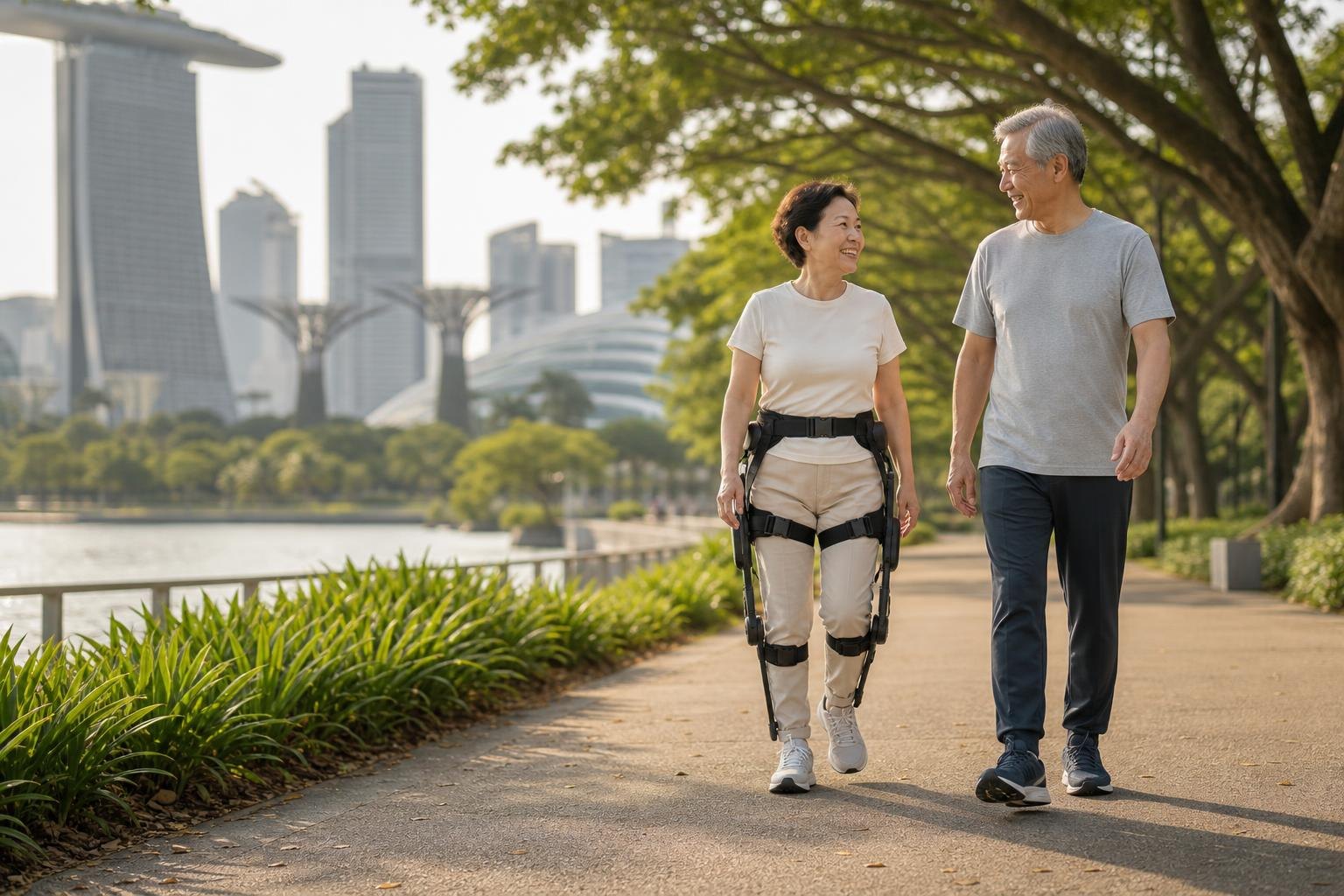
Singapore’s urban environment and active ageing initiatives make mobility an important everyday concern. Walking longer distances across MRT interchanges, parks like Gardens by the Bay or during family outings can highlight reduced walking endurance even in otherwise independent adults. For many, the goal is not to replace walking or physiotherapy but to manage effort so participation in social and travel activities remains possible.
Who this article is for
- Adults in Singapore who can stand and walk independently but tire on long walks
- People planning travel, park trips or full-day outings who want practical movement-support options
- Caregivers and family members researching powered walking assistance for a loved one
What is powered walking assistance and how does it help?
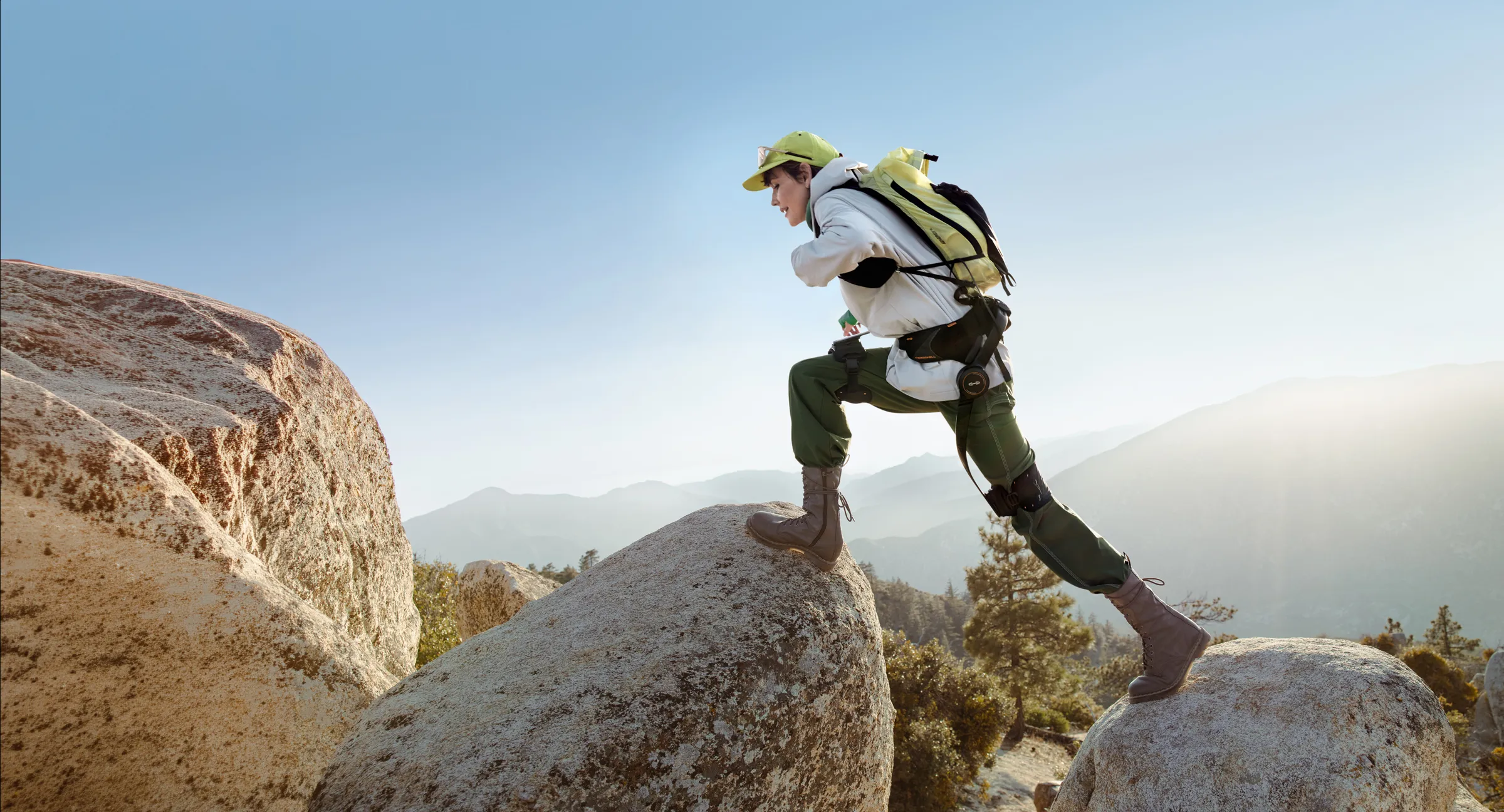
Powered walking assistance typically refers to wearable devices that supply timed mechanical torque at the hips or other lower-limb joints to supplement a person’s own muscles during walking. For independent walkers, the aim is to reduce perceived effort during extended walking so that individuals can cover greater distances or remain on their feet longer without being exhausted.
What independent walkers can expect
- Assistance during portions of the gait cycle rather than continuous full support
- Adjustable support levels to match effort needs and comfort
- The device is worn over clothing and should not interfere with normal walking mechanics when fitted correctly
Real-world Singapore use cases: travel, parks and long outings
Here are common scenarios where walking longer distances becomes relevant in Singapore and how a powered device may be used alongside other strategies.
Airports and travel days
- Long terminal walks and transfers can be tiring; a tested exoskeleton may reduce step effort during long walks between gates.
- Always confirm battery and carriage rules with airlines before flying; plan for battery storage according to airline policies.
Parks, Gardens and Walkable Attractions
- For full-day visits to places like the Botanic Gardens or Sentosa boardwalks, powered walking assistance can be an optional support to preserve energy between seated breaks.
- Plan seated rest points, shade and hydration even with a device; heat and humidity still contribute to fatigue.
Family outings and social days
- Wanting to keep up during intergenerational outings is a frequent reason people explore walking fatigue support.
- An exoskeleton may help maintain a steady pace and reduce the number of forced stops, making outings feel more enjoyable. It should be trialled beforehand to confirm comfort and usability in crowds and uneven paths.
Fitting, trials and practical checklist in Singapore
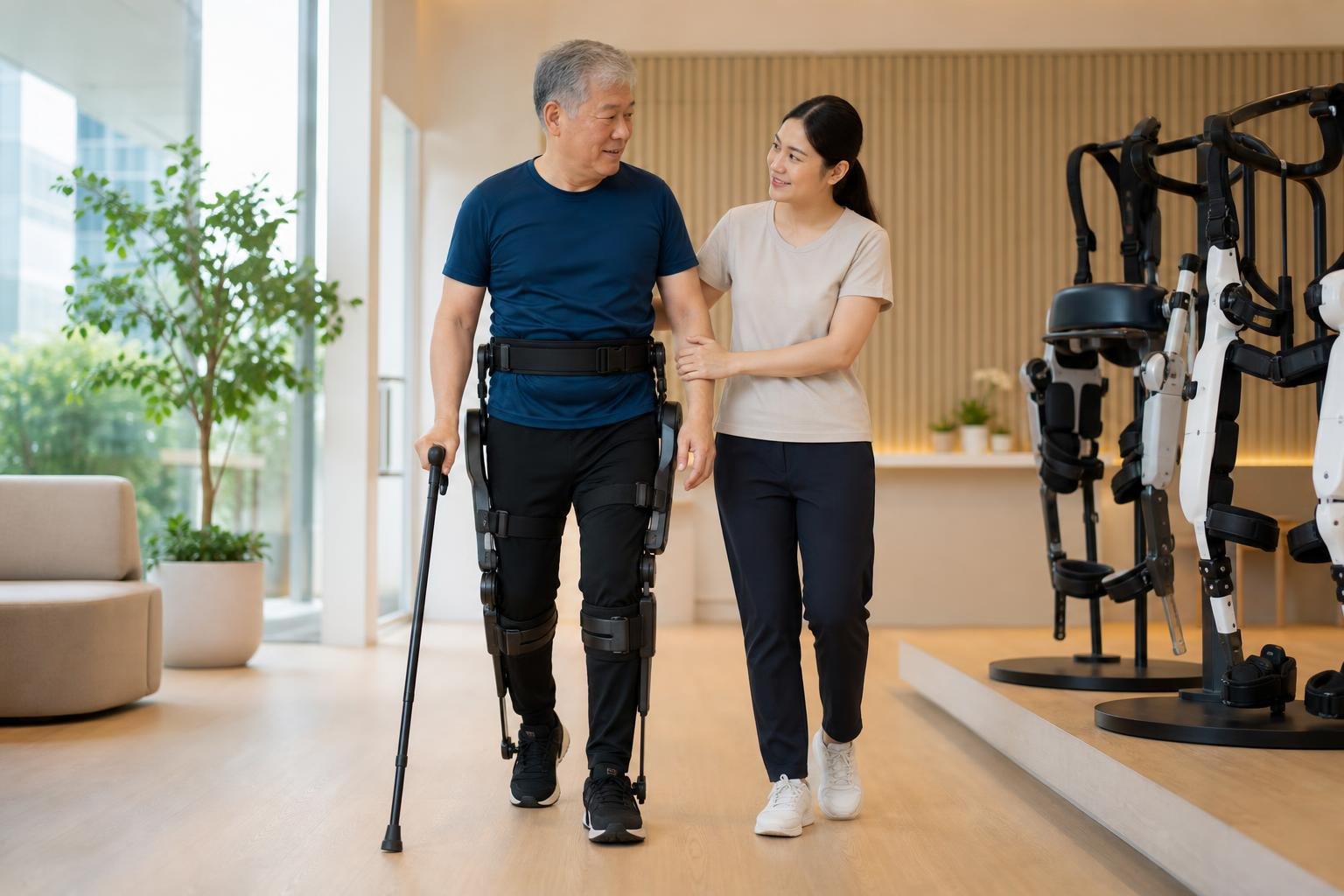
Proper fitting and supervised trials are essential. A device that feels helpful in a clinic may behave differently on varied public terrain. Singapore-based options often offer appointment trials — use these to evaluate real-world suitability.
Before your trial
- Bring the footwear you intend to use during outings.
- Wear comfortable, non-restrictive clothing.
- List typical walking tasks (e.g., markets, MRT transfers, park loops) so the trial can be task-specific.
During the trial
- Test multiple support levels and walking speeds to see how the device changes effort and gait feeling.
- Walk over different surfaces if possible: flat pavements, gentle slopes and stairs where the device is intended to be used.
- Ask about battery life in realistic conditions and how quickly the unit recharges or swaps batteries.
After the trial
- Assess whether you felt less effort on typical routes, not just during short treadmill walks.
- Check for pressure points, chafing or undue muscle soreness the next day — these can arise from fit or gait adaptation.
Safety, balance and when not appropriate
A consumer hip-assist exoskeleton should not be treated as a balance aid or fall-prevention device by default. It is most suitable for users who already have adequate balance and can recover from small trips. If balance deficits, repeated falls, sudden dizziness or new severe pain are present, seek clinical assessment first.
When to get medical or physiotherapy input
- New or worsening breathlessness, chest pain, dizziness or syncopal episodes
- Repeated falls or instability when walking
- Recent lower-limb injury or surgery
Stroke rehabilitation and where powered support fits
For stroke survivors the primary pathway is clinical rehabilitation: specialist gait training, physiotherapy, occupational therapy and assistive technology prescribed according to recovery stage and goals. Powered walking assistance can have a role — but only under appropriate clinical supervision and as part of a structured rehabilitation plan.
- Gait retraining and physiotherapy remain the foundation for improving walking after stroke.
- Where a clinician judges it appropriate, powered assistance may be trialled to complement gait training, particularly when the goal is gradually increasing walking distance for community participation.
- Devices marketed for consumer movement support are not replacements for prescribed rehabilitation equipment and should not be assumed to produce clinical recovery outcomes without clinician oversight.
If you or a family member is post-stroke and considering powered walking assistance, discuss it with your multidisciplinary rehabilitation team to determine timing, safety and training needs.
Comparing options: exoskeleton Singapore choices and Move It Well / Eulon
Searches for “walking exoskeleton Singapore” commonly reflect interest in practical, consumer-focused devices rather than purely clinical robotics. Move It Well is a local distributor that offers trials and information for Singapore users, and Eulon is an example of a consumer hip-assist model available through such channels. When comparing options locally, consider:
- Availability of supervised trials and aftercare in Singapore
- Ease of donning and doffing the device independently
- Responsiveness of support levels and how they match your walking tasks
- Service, warranty and local support for repairs and battery issues
Practical comparison table
| Consideration | Why it matters |
|---|---|
| Trial availability in Singapore | Try before you buy — real-world trails show whether fatigue is reduced on your typical routes |
| Service & local support | Rapid local repairs and battery service reduce downtime |
| Fit and comfort | Proper fit prevents chafing and ensures assistance is delivered where intended |
| Usability for travel | Battery carriage rules, packing and airport distances affect travel practicality |
Practical tips for using powered walking assistance in Singapore
- Combine the device with sensible pacing: schedule breaks and avoid heat exposure during midday.
- Use good footwear and maintain hydration — exoskeletons reduce muscular effort but do not eliminate environmental or cardiovascular strain.
- Practice in safe environments before trying busy or uneven public spaces.
- Carry a backup plan for long trips (public mobility services, seating points, or an accompanying person) if the device needs adjustment or recharging.
Summary: is a walking exoskeleton right for you?
For many independent walkers in Singapore, a consumer exoskeleton offering walking fatigue support and powered walking assistance can be a useful option to make travel, parks and long outings more comfortable. It is not a universal solution and must be trialled, fitted and used alongside good planning, footwear, pacing and professional advice where needed. Move It Well and Eulon are local options to explore via supervised trials and demonstrations, but final suitability depends on each person’s balance, goals and real-world testing.
If you’re considering an exoskeleton in Singapore, book a supervised trial, discuss any medical questions with your healthcare team, and plan your outings with sensible pacing and contingencies to get the most reliable results from walking longer distances.