Walking is something most people do without thinking — until an injury, stroke or progressive condition makes each step feel uncertain. Gait training is the structured process of relearning, correcting or improving walking mechanics under professional guidance. In Singapore, it is a core component of physiotherapy-led rehabilitation and is increasingly supported by assistive devices and robotic technologies.
This guide answers the key questions Singapore readers ask about gait training: what it is, who it helps, how it is delivered and where newer technologies fit into the picture.
What Is Gait Training?
Gait training refers to a set of therapeutic techniques designed to improve the way a person walks. It addresses the timing, coordination, strength, balance and symmetry involved in each step. Depending on the person’s condition and goals, gait training may focus on relearning a walking pattern after neurological injury, correcting a compensatory movement that has developed over time, or building the endurance and confidence needed for safe community walking.
Gait training is not a single exercise. It is a clinical process that a physiotherapist designs around an individual’s specific deficits, goals and environment. Sessions may take place in a hospital rehabilitation ward, an outpatient physiotherapy clinic, a community rehabilitation centre or, in some cases, at home.
Why Gait Training Is Relevant in Singapore
Search interest around stroke recovery Singapore reflects a genuine and sustained need. Stroke is one of the leading causes of adult disability in Singapore, and impaired walking is among the most common consequences. The National Registry of Diseases Office reports stroke as a significant cause of hospitalisation and long-term disability in the local population.
Beyond stroke, Singapore’s ageing demographic means that conditions affecting walking — including Parkinson’s disease, hip and knee osteoarthritis, spinal conditions and post-surgical deconditioning — are increasingly common. SingStat reported approximately 789,600 residents aged 65 and above in 2025, representing around 18.8 percent of the resident population. As this group grows, the demand for effective, evidence-informed gait rehabilitation will continue to rise.
Who Benefits From Gait Training?
Gait training is relevant across a wide range of conditions and life stages. Common reasons a physiotherapist in Singapore may recommend gait training include:
- Stroke recovery — relearning symmetrical, safe walking after hemiplegia or hemiparesis
- Traumatic brain injury — addressing coordination, balance and motor control deficits
- Spinal cord injury — maximising residual walking function depending on injury level and completeness
- Parkinson’s disease — managing shuffling gait, freezing episodes and fall risk
- Hip or knee replacement — restoring normal gait mechanics after surgery
- Orthopaedic injuries — correcting compensatory patterns that develop after fractures or ligament injuries
- Neurological conditions — including multiple sclerosis and cerebral palsy where walking efficiency is affected
- Age-related decline — addressing reduced step length, slower pace or increased fall risk in older adults
The specific goals, intensity and duration of gait training differ significantly between these groups. A physiotherapist will assess the person’s walking pattern, strength, balance, sensation and functional goals before designing a programme.
Core Physiotherapy Approaches to Gait Training
Physiotherapists in Singapore use several evidence-informed methods depending on the person’s diagnosis and stage of recovery.
Task-Specific Walking Practice
Repetitive, task-specific practice is central to neurological gait rehabilitation. The principle is that the brain and nervous system adapt through repeated, meaningful movement. Walking — on flat surfaces, slopes, stairs and varied terrain — is therefore practised directly rather than only through proxy exercises.
Overground Gait Training
Overground training involves walking on real surfaces with therapist guidance, manual facilitation and progressive challenges such as turning, stopping, stepping over obstacles and navigating uneven ground. It is the most common form of gait training and remains the foundation of most rehabilitation programmes.
Treadmill Training With or Without Body-Weight Support
Treadmill-based gait training allows therapists to control walking speed and provide a consistent surface. Body-weight support treadmill training (BWSTT) uses a harness system to partially unload the person’s body weight, enabling earlier walking practice in people who cannot yet fully bear their own weight. Research supports its use in stroke and spinal cord injury rehabilitation, though it is typically used alongside overground practice rather than as a standalone approach.
Balance and Proprioception Training
Safe walking depends on balance and the ability to sense limb position. Physiotherapists incorporate standing balance exercises, single-leg tasks, perturbation training and proprioceptive activities to address these components alongside walking practice itself.
Strength and Functional Exercise
Weakness in the hip extensors, knee extensors, ankle plantarflexors and core muscles directly affects gait quality. Targeted strengthening is therefore integrated into most gait rehabilitation programmes, particularly for post-surgical and orthopaedic presentations.
Gait Re-Education and Cueing
For conditions such as Parkinson’s disease, external cues — rhythmic auditory cues, visual floor markers or tactile feedback — can help a person initiate steps, maintain stride length and reduce freezing. Physiotherapists trained in Parkinson’s rehabilitation use these strategies as part of a broader gait programme.
Assistive Devices Used in Gait Training
Assistive devices support safe walking practice during rehabilitation and, in some cases, during everyday life after discharge. The appropriate device depends on the person’s balance, strength, weight-bearing status and walking goals.
| Device | Primary Function | Common Use in Gait Training |
|---|---|---|
| Parallel bars | Bilateral upper-limb support | Early-stage walking practice in clinical settings |
| Walking frame / rollator | Balance and weight-bearing support | Community ambulation for those needing stability |
| Walking cane | Balance and partial load sharing | Later-stage rehabilitation and community walking |
| Ankle-foot orthosis (AFO) | Foot drop correction, ankle stability | Stroke and neurological gait rehabilitation |
| Functional electrical stimulation (FES) | Muscle activation via electrical impulse | Foot drop management, neurological rehabilitation |
| Robotic gait training systems | Powered, repetitive gait assistance | Neurological rehabilitation under clinical supervision |
Robotic Gait Training: What It Is and Where It Fits
Robotic gait training uses powered exoskeleton systems or end-effector devices to guide a person’s legs through a walking pattern with high repetition and consistent movement quality. In Singapore, robotic rehabilitation systems are used in selected hospital and rehabilitation settings for conditions such as stroke, spinal cord injury and acquired brain injury.
These clinical systems differ from consumer movement-support devices. They are operated by trained rehabilitation professionals, integrated into a broader therapy programme and used with patients who may have significant motor impairment. Examples of clinical robotic gait systems used internationally and in some Singapore rehabilitation centres include treadmill-based exoskeletons and overground powered orthoses.
The proposed benefits of robotic gait training in neurological rehabilitation include:
- High repetition of stepping movements, which may support neuroplasticity
- Consistent movement guidance that reduces compensatory patterns
- Objective data on step symmetry, cadence and weight distribution
- Earlier mobilisation for people who cannot yet walk independently
It is important to note that robotic gait training is a supervised clinical intervention, not a self-directed activity. Its use, intensity and duration are determined by the rehabilitation team based on the person’s clinical presentation and progress.
Consumer Powered Exoskeletons: A Different Category
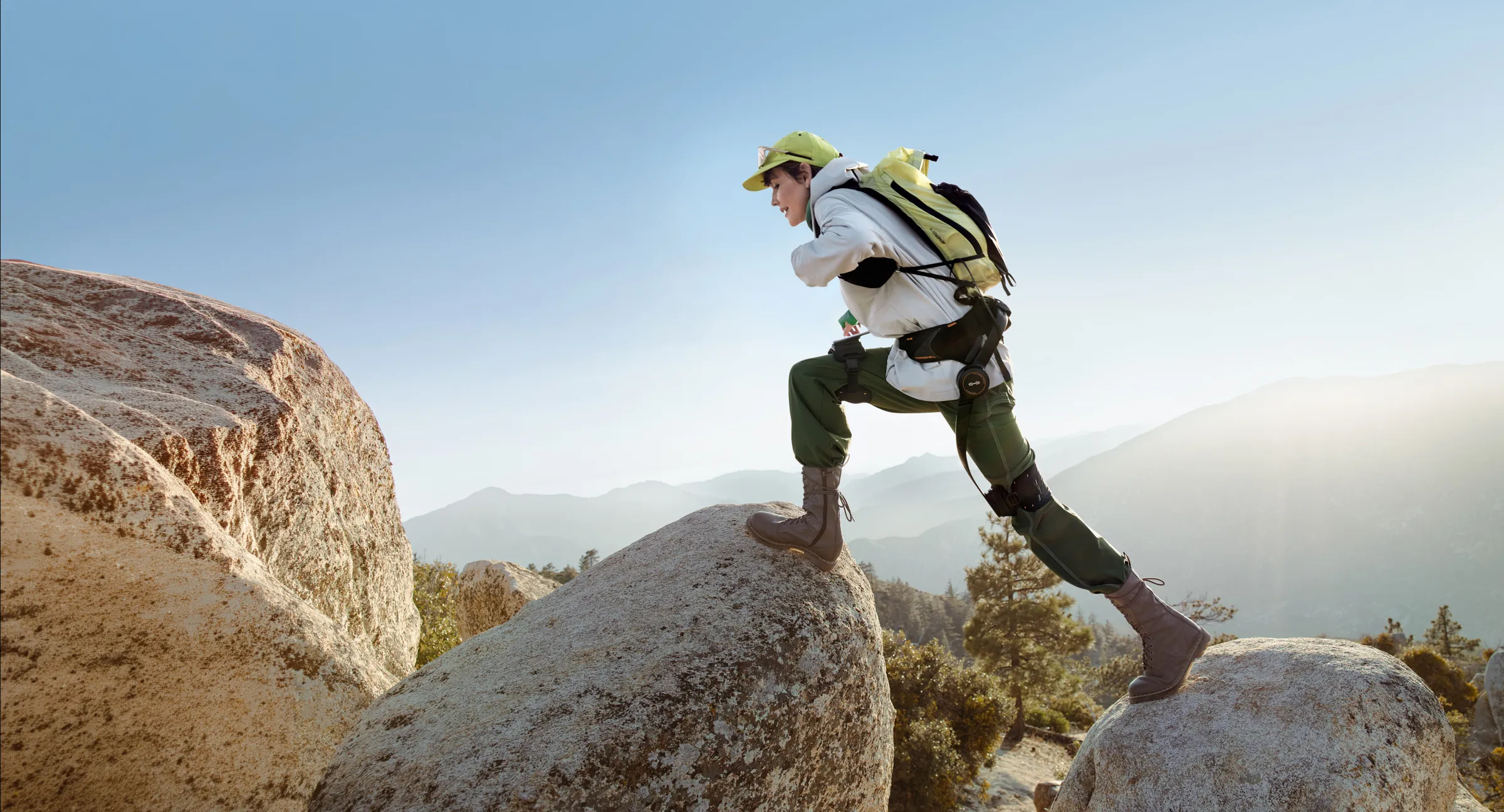
Separate from clinical robotic systems, consumer-grade powered exoskeletons are designed for adults who can already stand and walk independently. These devices provide movement assistance — typically at the hips — to reduce effort during longer walks or more demanding activities.
Move It Well distributes the Eulon 1.0 Pro in Singapore as a consumer movement-support exoskeleton for independent walkers. It is not presented as a rehabilitation device or a treatment for any medical condition. It is intended for adults who are already mobile and want powered hip assistance during everyday activities such as extended walking, travel or community outings.
If you or someone you care for is in active stroke or neurological rehabilitation, the appropriate technology is a clinically supervised robotic or assistive system prescribed by a physiotherapist or rehabilitation physician — not a consumer exoskeleton. Consumer devices such as the Eulon 1.0 Pro may be relevant at a later stage, once independent walking has been established and the goal shifts to maintaining activity and reducing fatigue in daily life. Any transition of this kind should be discussed with the treating physiotherapist.
Where to Access Gait Training in Singapore
Gait training in Singapore is available through several pathways depending on the person’s diagnosis, funding and stage of recovery:
- Public hospital rehabilitation units — including restructured hospitals with inpatient and outpatient physiotherapy services
- Community hospitals — step-down rehabilitation for people transitioning from acute care
- Outpatient physiotherapy clinics — for ongoing or maintenance gait rehabilitation in the community
- Home physiotherapy services — for people who cannot travel to a clinic
- Private physiotherapy practices — offering more flexible scheduling and specialist expertise
Funding support may be available through MediShield Life, Integrated Shield Plans, MediFund or the Community Health Assist Scheme (CHAS), depending on the setting and the person’s eligibility. It is advisable to confirm coverage with the provider before commencing treatment.
Key Questions to Ask a Physiotherapist About Gait Training
If you or a family member is considering gait training in Singapore, the following questions can help guide the initial conversation:
- What specific aspects of my walking pattern need to be addressed?
- What is the recommended frequency and duration of sessions?
- Will I need any assistive devices, and if so, which type?
- Is robotic or technology-assisted training appropriate for my condition?
- What can I do at home between sessions to support progress?
- How will progress be measured and when should I expect to see improvement?
Summary
Gait training in Singapore encompasses a range of physiotherapy-led approaches designed to help people walk more safely, efficiently and confidently after injury, illness or age-related decline. It is most commonly associated with stroke recovery, but it is relevant across many neurological, orthopaedic and age-related conditions.
Effective gait rehabilitation combines task-specific walking practice, strength and balance training, appropriate assistive devices and — where clinically indicated — robotic or powered technologies under professional supervision. Consumer movement-support exoskeletons such as the Eulon 1.0 Pro, available through Move It Well in Singapore, occupy a different category: they are designed for independent walkers seeking powered assistance in daily life, not for people in active clinical rehabilitation.
If you are looking for gait training support in Singapore, the starting point is always a physiotherapy assessment. From there, the right combination of techniques, devices and technologies can be matched to your specific goals and clinical needs.